AssessmentsAgentic Learning
What the First Assessment Really Tells Us
Discover how meaningful reading assessment helps educators uncover students’ skills, save instructional time, and turn data into targeted action.
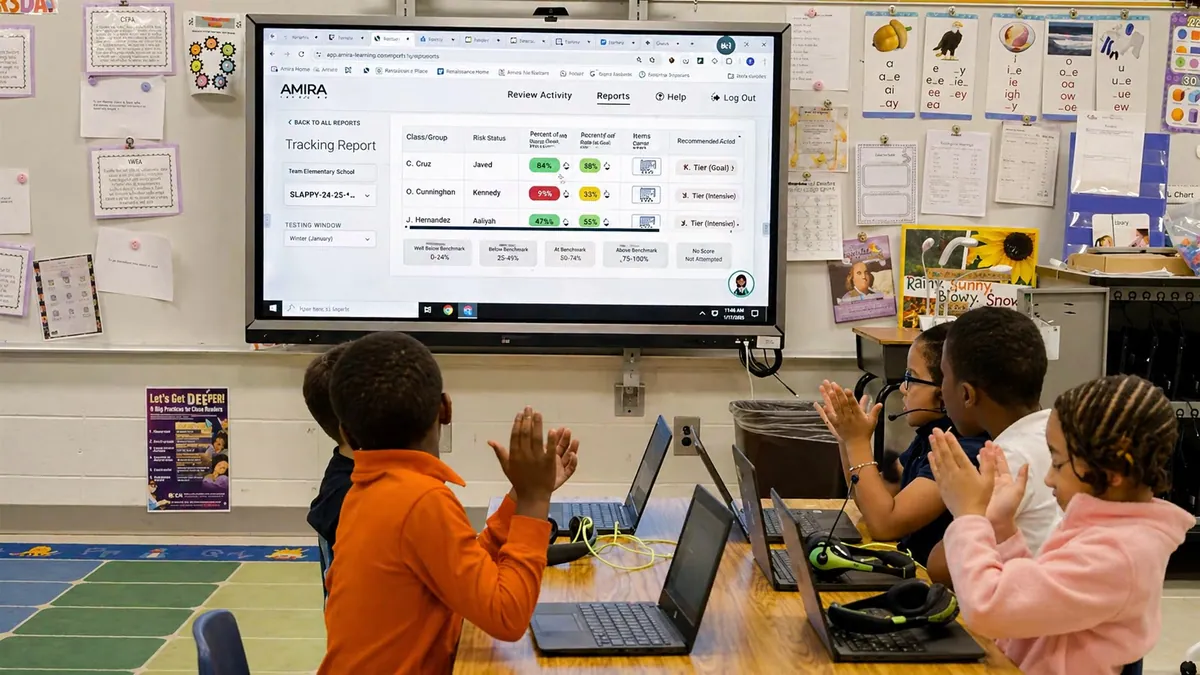
Now that the back-to-school celebrations have settled and the beautifully organized classrooms are filled with students, educators face the reality of the work ahead. And every fall, one word has the power to shape everything that follows.
Assessment.
For too long, assessment has been viewed as a hurdle, something we do to students instead of something we do for them. It has meant lost instructional days, anxious students, and teachers spending their weekends trying to make sense of color-coded spreadsheets.
After serving as a classroom teacher, reading specialist, principal, and district leader, I’ve come to believe something deeply: The best assessments don’t just measure children. They introduce us to them.
Every learner walks into school with a unique reading story. Some are eager to read aloud. Some decode accurately but struggle to comprehend. Others have remarkable oral language skills but need support connecting sounds to print. Without a meaningful, efficient way to assess those skills, much of that story remains invisible, and our continuous learning loop cannot begin.
As I frequently discuss with Dianne Henderson, renowned psychometrician and VP of Impact at Amira, the field often talks about assessment purely in terms of psychometrics, validity, and reliability. Those concepts matter immensely because they help us trust the baseline data. But Dianne and I agree: an assessment's greatest value isn't found in a technical report.
Its true value is found in the classroom.
Assessment is the critical first step in our continuous learning loop of assessing, tutoring, and instructing. When leaders provide teachers with data they can trust, instruction becomes intentional rather than reactive. When principals identify trends early, resources can be deployed strategically.
And when AI is grounded in evidence, not hype, it doesn’t replace educator expertise. It amplifies it. By automating the heavy lifting of gathering data, we give teachers the clarity they need to lead high-impact small groups and individualized instruction.
Unlike traditional multiple-choice assessments that reduce a child's reading journey to passive clicking, Amira’s assessment engages students in productive, out-loud tasks that span the entirety of Scarborough’s Reading Rope. It doesn't just evaluate isolated skills; it captures the nuance of word recognition and language comprehension in action.
This is exactly how we set the foundation for the year, but with a critical advantage: it gives educators their most valuable resource back. Time. Because Amira accurately and individually assesses students simultaneously, teachers reclaim the hours usually lost to pulling students one-by-one to the back table.
But getting this baseline data is only the first step. To make it matter, we have to set clear targets tied to consistent usage. We have the national proof of what is possible when we do.
As we highlighted in our back-to-school kickoff, actionable data combined with just 30 minutes of usage a week (about 6 minutes a day) drives remarkable growth. In an independent study by the Texas Education Agency, students who hit this target usage with Amira achieved 45 weeks of reading growth, compared to only 36 weeks for those who did not. That is 9 additional weeks, a full quarter, of extra reading growth, all stemming from a clear, early assessment that mapped directly to their daily tutoring.
Change the first question you ask about your beginning-of-year data. In our special back-to-school assessment episode of the Champion Every Voice podcast, Dianne Henderson and I discuss why shifting the conversation from a student's score to a student's skills is the first step in making assessment truly actionable.
Tomorrow, instead of asking your instructional team, "What percentage of our students are proficient?" ask, "What specific strand of the Reading Rope is holding our struggling readers back, and how are we targeting it?"
Join us next month as we move from assessment to action. Once we know exactly what our students need, how do we build the daily habits that actually rewire the reading brain? We’ll be unpacking the neuroscience behind routines that stick in our next post: "The Reading Brain Loves Routines."