AssessmentsClose the GapEarly ChildhoodEdTechTeacher Engagement
What One Second-Grade Classroom in Louisiana Can Teach District Leaders About Early Reading Intervention
There's a moment Olevia Griffin describes that every educator recognizes, the moment a student goes from "I can't" to "Wait, that's my score?"
There's a moment Olevia Griffin describes that every educator recognizes, the moment a student goes from "I can't" to "Wait, that's my score?"
Griffin is a second-grade teacher at Delhi Elementary in Louisiana, a small pre-K through fifth grade school where she teaches all core subjects and serves as her school's Amira Champion. She's been in education for 11 years, starting as a substitute, moving to paraprofessional, and eventually landing in the classroom. That path matters, because she's seen struggling readers at every vantage point, and what she's learned about early reading intervention is worth paying attention to at the district level.
The cost of waiting
Griffin taught kindergarten for four years before moving to second grade, and she's direct about what she sees when early intervention doesn't happen: gaps that compound.
"If we wait to intervene, whether it's kindergarten or first, something is gonna be missing somewhere," she said on the Champion Every Voice podcast.
That's not a new idea, but it's one that gets deprioritized in practice. Districts delay formal intervention because a student seems "almost there," because caseloads are full, because the referral process takes time. Griffin's framing is useful for leaders: waiting is itself a decision, and it has a cost.
Her focus on the five foundational literacy skills, phonemic awareness, phonics, fluency, vocabulary, and comprehension, isn't a checklist. It's a diagnostic lens. When a student struggles in second grade, she traces it back: which piece is missing? Because the skills build on each other, a gap in phonics doesn't stay a phonics problem. It becomes a fluency problem, then a comprehension problem, then a confidence problem.
Early identification and targeted reading intervention programs aren't just best practice. By the time a reading gap is obvious, it's already expensive to close.
What "small wins" actually look like in a classroom
Griffin references psychologist Erik Erikson's work on competence, the idea that students who feel capable are more motivated to keep trying. Her classroom is built around engineering those moments deliberately.
She gives students opportunities to practice without pressure. She celebrates effort over correct answers. She calls students to her desk individually when they get their test scores back, so they see the grade with their own name on it. "Whose name is that?" she asks. "That's my name." "Yeah, you did that."
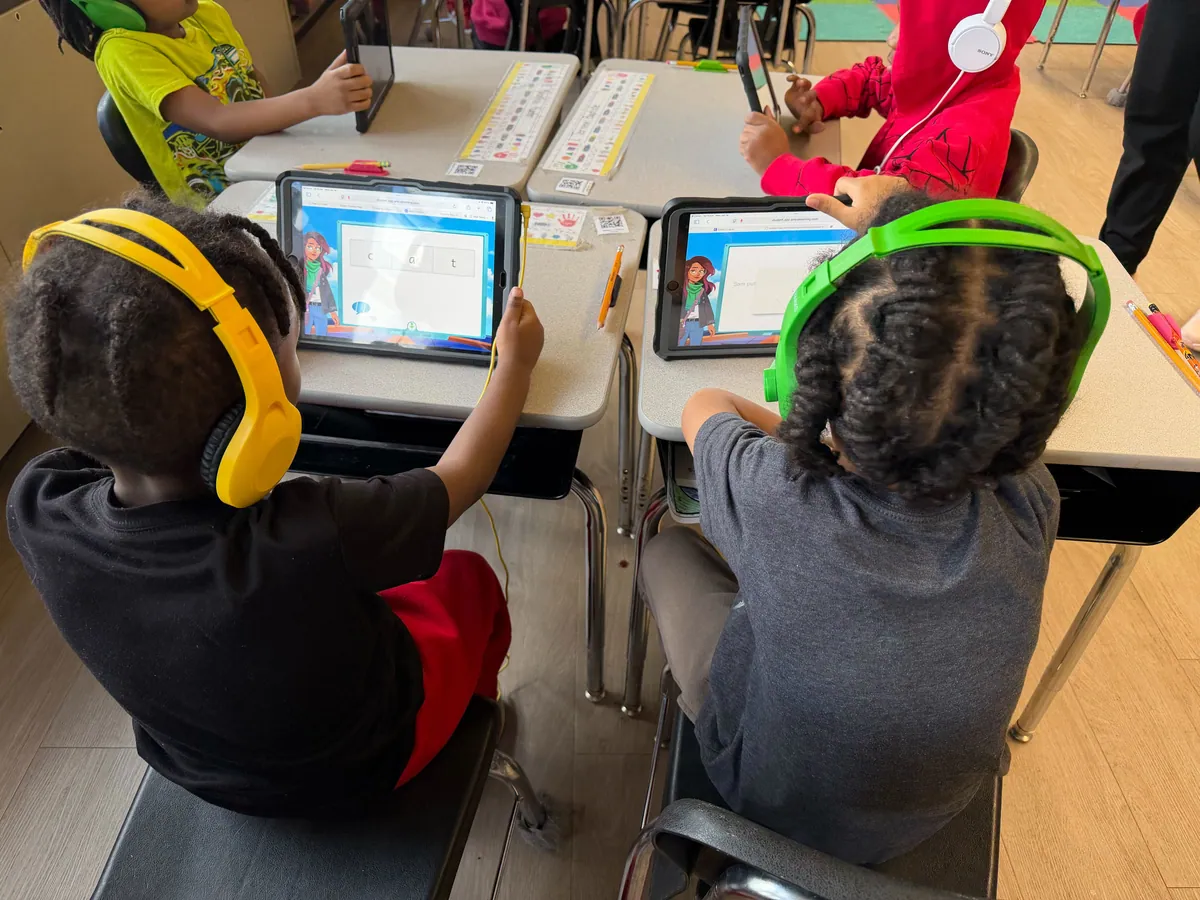
For district leaders thinking about reading intervention programs and how to drive adoption, this is the implementation layer that data dashboards don't capture. An AI reading program or adaptive reading software can provide the repetition and personalization that one teacher can't deliver alone, but the students who engage most are the ones whose teacher has already established that trying is safe and progress is worth celebrating.
Griffin is explicit about what Amira does in her classroom: "She encourages. When you have a teacher encouraging you and a program encouraging you, they have a lot of encouragement." That redundancy isn't accidental. It's a strategy.
The multilingual learner piece
Griffin teaches in Louisiana, where dialect and language variation are real factors in early literacy development. When she had an English Language Learner in her class, her first move was research, what small group interventions are appropriate, what materials need to be bilingual, how to build on what the student already knows.
For district leaders serving multilingual learners, her experience is a useful data point: an AI reading assistant that adapts to a student's level and provides immediate encouragement can accelerate confidence even before full English fluency is established. Her ELL student tried Amira for one day and came back saying, "I like this. This is really fun." That's not a testimonial, it's a signal about what accessibility and low-stakes practice can do for students who are navigating two languages at once.
School-wide celebration as an intervention strategy
Delhi Elementary runs weekly Amira Awards every Friday. Griffin pulls data Thursday evening, identifies the top reader by stories completed at each grade level from kindergarten through fifth, and announces the winners in a whole-school assembly. Winners get a certificate, a gift, and recognition in front of their peers, teachers, administrators, and instructional coaches.
The school also has a stuffed animal named Spot, given by an Amira team member, that goes home with the top class of the week. Griffin describes fifth graders who "never liked to read" suddenly showing up and competing. Her principal was in tears.
This is worth examining as a model, not just a feel-good story. The intervention isn't only happening at the student level. It's happening at the culture level. When reading growth is visible, public, and celebrated, not just tracked in a dashboard, it changes what students believe is possible for them. That shift in belief is a prerequisite for sustained reading growth, especially for students who have already internalized that reading is something they can't do.
For district leaders evaluating supplemental reading programs, the question isn't just whether the program works in isolation. It's whether your implementation plan includes the conditions that make it work, teacher buy-in, consistent use, and some version of the recognition loop Griffin has built at Delhi Elementary.
The bottom line
Griffin's advice to leaders who are unsure about implementing AI tools with early learners is two words: "Do it." But the fuller version of her message is more nuanced than that. The technology works because of what surrounds it, a teacher who has built trust with her students, a school culture that treats reading growth as worth celebrating, and a consistent commitment to intervening early rather than waiting to see if kids catch up on their own.
Reading intervention programs are only as effective as the environment they land in. What Griffin has built in Room 256 at Delhi Elementary is a case study in what that environment looks like.
🎧 Listen to the full conversation with Olevia Griffin on the Champion Every Voice podcast. https://rss.com/podcasts/champion-every-voice/