What Schools and Families Should Know About Amira, Privacy, and Student Data
Parents are right to ask how AI is being used in schools. Here are the questions every district should be ready to answer, and how Amira approaches student privacy, data, and trust.
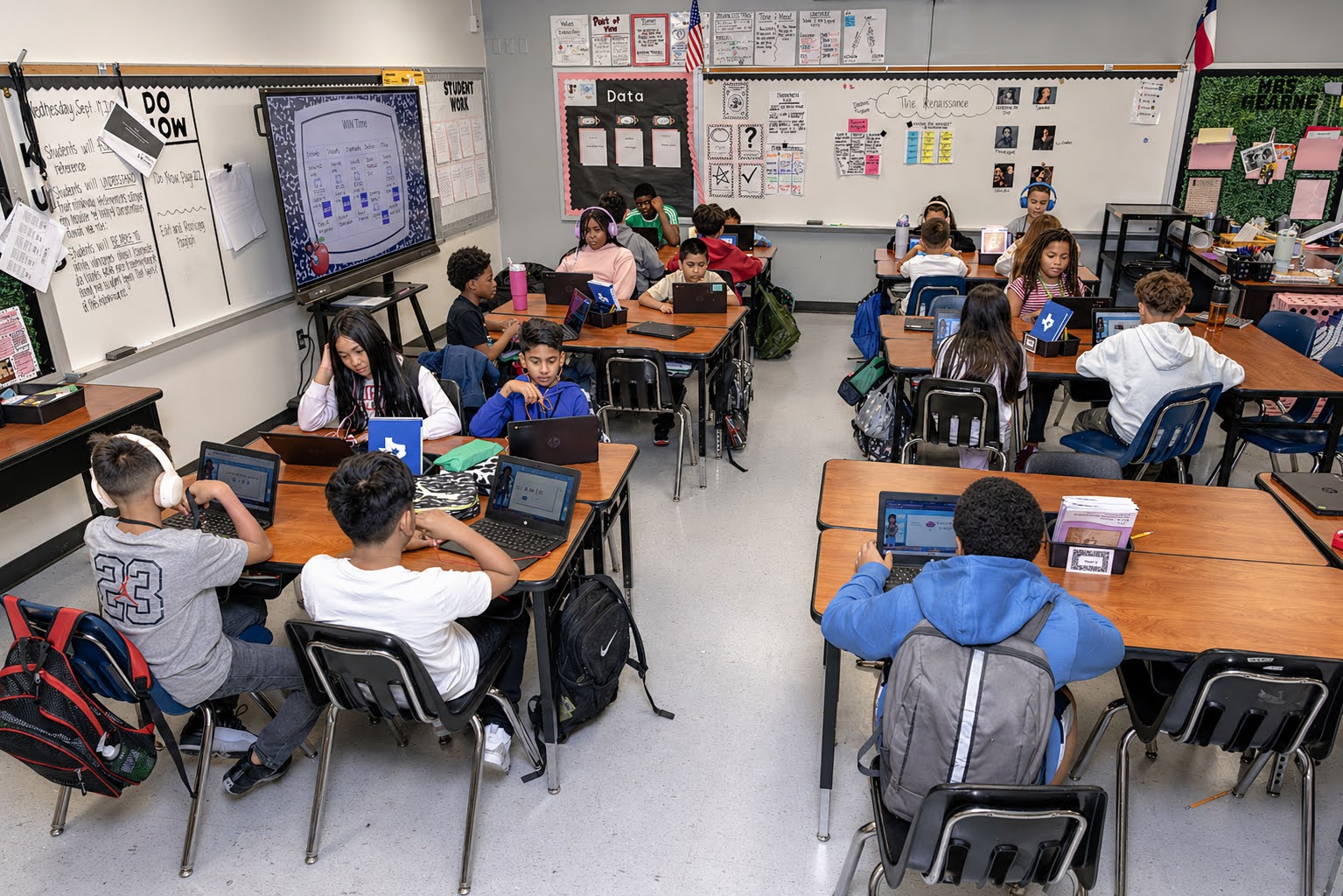
Parents are right to ask questions about AI in schools; they should ask what data is being collected and who can see it, they should ask how AI is being used, whether it is helping students learn, and whether teachers still have a clear view into what is happening.
At Amira, we welcome those questions.
When schools introduce any AI learning solution, families deserve more than reassurance. They deserve clear answers. Districts deserve answers too, because they are the ones standing in front of parents, teachers, and school boards explaining how technology supports students and how student information is protected.
That responsibility matters even more when AI is involved.
Amira is the Learning Agent for Reading Growth™. That means Amira listens, assesses, tutors, and guides reading support in real time. Because Amira works closely with students as they read aloud, privacy and data protection are not side issues. They are foundational to how Amira is designed.
Here are the questions every school should ask of any AI company, and how Amira answers them.
1. What student data does Amira collect, and why?
Amira collects the data needed to understand and support a student’s reading development.
That includes information generated when students read aloud. This matters because reading is not just something students answer questions about. Reading is something students do. To understand how a child is progressing, it is important to hear the reading itself.
Amira’s model is built around authentic production, which means students produce real reading behaviors, such as reading aloud, speaking, and responding. Instead of relying only on multiple-choice answers or indirect signals, Amira listens to students read so she can identify patterns in fluency, accuracy, comprehension, and skill development.
That data has a clear purpose: to help students receive more precise reading support and to help teachers understand what students need next.
A parent-friendly way to explain it:
“Amira collects reading data so she can understand how a student is actually reading, not just how they perform on a multiple-choice question. That information helps provide tutoring, feedback, and teacher-facing insights connected to reading growth.”
The key point is purpose. Amira does not collect student reading data because it is interesting to have. Amira collects it because it is necessary to support the work schools are asking her to do: assess, guide instruction, and tutor students 1:1.
2. Who can see student data?
Student data should serve the student, the teacher, and the district.
Amira believes districts should remain in control of their student data. Student information should not become a vendor asset or be used in ways that are disconnected from the district’s instructional goals. And it should not be treated as something families have to trust blindly.
The people who need access to student data are the people responsible for supporting that student’s learning. That includes authorized educators, school leaders, and district teams who use the information to understand progress, identify needs, and make instructional decisions.
A parent-friendly way to explain it:
“Student data is available to the educators and district leaders who are responsible for supporting student learning. Amira does not believe student data should be treated as company-owned information. Districts should remain in control.”
For administrators, this matters because it gives them a clear answer to one of the most important family questions: Who has access to my child’s information?
The answer should be simple: the people who need it to support learning, under the district’s control.
3. Is Amira using student data to train outside AI models?
No district should have to guess whether student data is being used to train general-purpose AI.
This is one of the most important questions families and school boards are asking right now. They want to know whether student information is being sent into large external models, used to train consumer AI tools, or shared beyond the educational purpose the district agreed to.
Amira is purpose-built for reading. Her AI stack is proprietary, closed-loop, and designed specifically for the Science of Reading. That matters because Amira is not a general-purpose chatbot being dropped into a classroom. She is a learning agent designed to support reading assessment, instruction, and tutoring within a defined educational context.
A parent-friendly way to explain it:
“Amira is not an open-ended public AI tool. She is built specifically for reading, with AI designed for educational use. Student data is not used to train outside consumer AI models.”
This distinction helps families understand that “AI” is not one thing. There is a difference between a general-purpose AI tool that can answer almost anything and a purpose-built Learning Agent designed to do a specific learning job within a school environment.
Amira’s job is reading growth.
4. What happens to student data when a district ends its contract?
Student data should be handled with respect at every stage of a partnership, including when the partnership ends.
Districts should ask every AI company what happens to student data after the contract is over. Is it retained? Deleted? Returned? De-identified? For how long? Under what process?
Amira’s position is simple: student data belongs in service of the district’s educational purpose. When a district relationship ends, student data should be handled according to the district’s agreement, applicable law, and clear data-retention practices.
A parent-friendly way to explain it:
“Student data is not something Amira keeps indefinitely for unrelated purposes. When a district contract ends, student data is handled according to the district’s agreement and applicable privacy requirements.”
For administrators, this is an important trust-builder. Families want to know that student information does not live forever in a system they no longer use. A clear answer helps show that the district has thought beyond adoption and into long-term stewardship.
5. Is Amira a black box?
Parents are understandably concerned when an education technology gives students scores or recommendations without clearly explaining what they mean.
That “black box” concern is especially important in AI. Families and educators should not be expected to trust mysterious outputs. Teachers need to understand what the data means. Leaders need to see patterns across classrooms and schools. Parents need clear information about how their child is progressing.
Amira does not believe in opaque scoring.
Amira’s data is designed to flow back to the people who need it most: teachers and leaders. Through clear reports and dashboards, educators can see reading progress, understand student needs, and use the information to support instruction. Parent reports can also help families understand what Amira is seeing and how their child is growing.
A parent-friendly way to explain it:
“Amira does not keep learning data hidden inside the technology. The goal is to make reading progress easier for teachers, leaders, and families to understand.”
This is core to Amira’s role as a learning agent. Amira is not just producing a score. She is helping connect assessment, instruction, and tutoring so the district’s reading strategy can move into daily classroom action.
That only works if educators can see and use the information.
How District Leaders Can Use This Information
When parents ask about AI, privacy, and student data, they are not being difficult.
They are doing exactly what they should do.
They are asking whether their child is safe, if the technology is helping, if the teacher still matters, and if the district has done its homework.
Those questions deserve confident answers.
Amira was built for that level of scrutiny. As the Learning Agent for Reading Growth, Amira uses AI to listen, assess, tutor, and guide reading support in ways that are purposeful, protected, and connected to classroom instruction.
The goal is not to ask families to simply trust AI.
The goal is to give families enough clarity to trust the district’s decisions.
That is the commitment behind Amira: responsible AI for reading growth, designed to support teachers, give families clarity, and protect the students we serve.
Read more from the AI & The Reading Brain Blog
.avif)