Not All AI Is the Same: A Guide to What’s Actually in Your Child’s Classroom
Administrators need simple language to explain what AI is actually being used, why it matters, and how families can ask better questions.
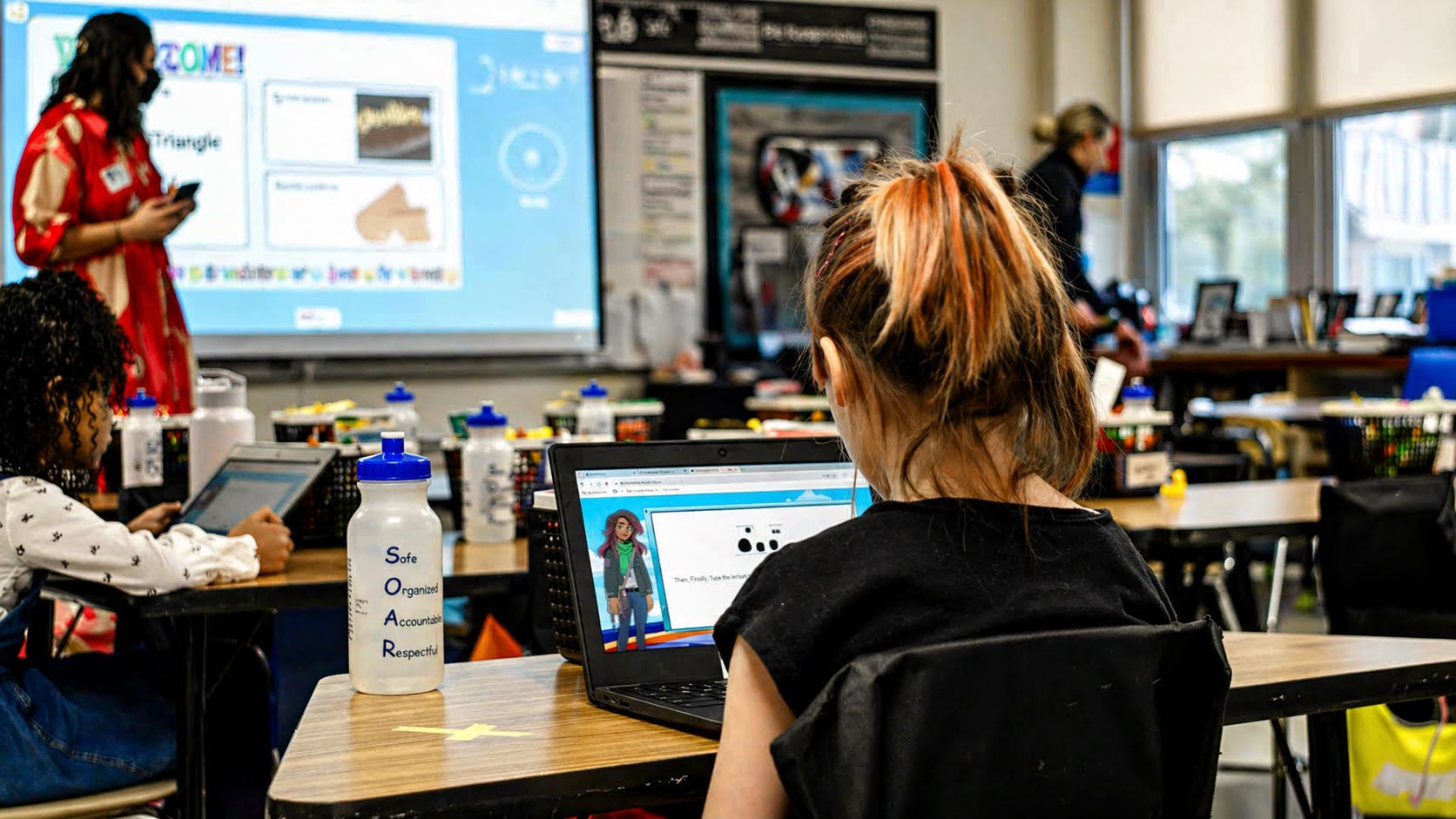
AI is already part of the school conversation. Some parents are asking whether students should be using AI at all. Others are worried about screen time, data privacy, or whether technology is quietly replacing teachers. Some are thinking about ChatGPT. Others are thinking about YouTube, social media, Chromebooks, online assessments, adaptive learning programs, or the learning apps their child uses every week.
That is part of the challenge.
When families ask, “Are you using AI in the classroom?” they are probably each picturing something different.
For administrators, this creates both a communication challenge and an opportunity. The challenge is that AI has become a catch-all phrase for almost every kind of school technology. The opportunity is that district leaders can help families understand the differences.
Not all AI is the same. Not all edtech is AI. Not all screen time serves the same purpose. And not all digital learning experiences are designed with the same goals.
Parents do not need a technical lecture. They need clear explanations that help them understand what is in their child’s classroom and how to evaluate whether it belongs there.
What Do We Mean When We Say AI in Education?
AI in education can refer to many different technologies.
At the simplest level, artificial intelligence is technology that can analyze information, recognize patterns, generate responses, or make recommendations. In schools, AI might help score student work, recommend practice, support lesson planning, translate text, summarize information, or respond to a student in real time.
But that broad definition is not enough for parents.
A chatbot that answers open-ended questions is very different from an AI reading tutor that listens to a student read aloud and gives immediate feedback. A video platform that recommends the next clip is very different from a learning agent designed to support a district’s reading strategy.
That vocabulary matters.
A general-purpose AI tool is designed for many kinds of users and many kinds of tasks. It may help generate text, answer questions, summarize documents, or brainstorm ideas.
A learning agent is different. A learning agent is a secure AI tool built for a specific instructional purpose. In reading, for example, a learning agent might listen to a student read, analyze what the student understands, respond with tailored tutoring, and provide teachers with information they can use for instruction.
That distinction helps families move from a broad fear of “AI in schools” to a more useful question:
What kind of AI is being used, and what is it being asked to do for students?
A Simple Breakdown of AI Parents May See in Classrooms
1. Active AI vs. Passive Technology
Some technology is passive. It delivers content to students; a video plays, a passage appears, a quiz is assigned, a student clicks through a lesson.
Passive technology is not automatically bad. It can be useful when it is well-designed and connected to instruction. But it mostly delivers information or practice.
Active AI does something different. It responds to what the student is doing.
For example, active AI - or learning agent - might listen as a student reads aloud, notice a pattern in errors, and provide immediate feedback. It might adapt the next task based on the student’s response or help a teacher see which students are ready to move forward and which students need more support.
How to explain it to families:
“Some technology simply delivers content. Other AI responds to what a student is doing in the moment. We look closely at whether a program is just putting students in front of a screen or whether it is actively supporting learning.”
The key question for parents is not just, “Is my child using technology?”
It is:
What is the technology doing while my child is using it?
2. Closed-Loop AI vs. Open-Ended AI
Some AI is open-ended: a student can type almost anything into it and receive a response, which is how many general-purpose chatbots work. Open-ended tools can be powerful, but they require clear guardrails, strong adult oversight, and careful decisions about when they are appropriate for students.
Closed-loop AI has clearer boundaries. It is designed for a specific educational purpose, with limits on what the AI does, what content it uses, and how it responds.
In education, that difference matters.
An open-ended chatbot might help a student brainstorm an essay, but it could also produce inaccurate information, give an answer that is not grade-appropriate, or allow a student to bypass the thinking process.
A closed-loop reading experience, by contrast, might be designed only to support reading practice, assessment, or tutoring within a specific instructional sequence.
A useful parent-friendly explanation:
“Some AI tools are open-ended and can respond to almost anything. Others are purpose-built for a specific learning job. We evaluate whether the AI has the right boundaries for students and whether it connects to what teachers are actually teaching.”
The key question is:
Is this AI purpose-built for learning, or is it a general tool being used in a classroom setting?
3. Evidence-Based AI vs. Engagement-Based Technology
Not every digital tool is designed around learning outcomes.
Some technology is optimized for engagement. It is built to keep users clicking, watching, scrolling, or coming back for more. That model may make sense in entertainment, but it should raise questions in education.
Schools need technology that is optimized for learning.
Evidence-based AI should be connected to research, instructional goals, and measurable student progress. It should help answer questions like:
- Are students improving?
- Are teachers getting useful information?
- Is the technology supporting the district’s curriculum and instructional model?
- Can we see growth over time?
A useful parent-friendly explanation:
“Engagement matters, but engagement alone is not the goal. We are looking for technology that supports learning outcomes, not just time on screen.”
This is especially important when parents raise concerns about screen time. Families are not always objecting to the existence of screens. They are asking whether the time is worth it.
The key question is:
Is the technology designed to produce learning, or just to hold attention?
5 Questions to Ask Any EdTech Vendor
Administrators can use these questions when evaluating AI or explaining decisions to families and boards.
Quick Checklist
1. What is the evidence base?
Is the product grounded in credible research, learning science, or instructional best practice?
2. Are there independent studies showing that it works?
Has the tool been studied by outside researchers, or is the company relying only on its own claims?
3. What student data do you collect, and how is it used?
Can the vendor clearly explain what data is collected, who can access it, how it is protected, and whether it is used only for educational purposes?
4. How does the AI connect to classroom instruction?
Does it align with the district’s curriculum, standards, scope and sequence, or instructional goals?
5. What role does the teacher play?
Does the technology support teacher decision-making, or does it create a separate learning experience disconnected from the classroom?
A simple rule of thumb: If a vendor cannot answer these questions clearly, district leaders should keep asking.
Skepticism Is Not the Problem
Parents are right to be skeptical.
They should ask questions when new technology enters the classroom. They should want to know how student data is protected. They should expect evidence that learning tools actually support learning. They should care about the role of teachers. And they should be cautious when companies make big promises about AI.
Skepticism is not a barrier to adoption. It is part of responsible adoption.
The goal is not to shut down parent concerns. The goal is to channel them into better conversations.
Instead of asking, “Is AI good or bad?” families and school leaders can ask:what job the AI is doing, whether it is safe for students, whether it is built for education, and whether it supports teachers and instruction.
Those are stronger questions. They help parents, teachers, and administrators focus less on fear and more on quality.
They also hold edtech companies accountable.
Administrators Need to Be the Expert Guides Families Require
AI in education is moving quickly; parents know that, teachers know that, school boards know that.
The districts that build trust will not be the ones that claim to have every answer. They will be the ones that can explain their decisions clearly.
Administrators can build trust by helping families understand that “AI” is not one thing. A chatbot, a video recommendation engine, a digital worksheet, a Chromebook, a reading tutor, and a learning agent are not the same. They have different purposes, risks, and instructional value.
That clarity matters.
When district leaders can explain the difference between passive screen time and active learning support, between open-ended AI and purpose-built AI, and between engagement-based technology and evidence-based learning design, the conversation changes.
It becomes less about defending technology and more about choosing wisely.
And that is the role families need administrators to play now: not salesperson, not apologist, not gatekeeper, but expert guide.
The question is no longer whether technology will be part of education, because it already is.
The better question is whether schools can explain, with confidence and transparency, which technology deserves a place in the classroom and why.
Read more from the AI & The Reading Brain Blog



.avif)